The Golden Valley: a visual biography of the Garw Valley [published by SEREN]
Phil Cope writes of The Golden Valley:
“I moved up to the Garw Valley in 1985, to co-ordinate the renovation of the then half-derelict Blaengarw Workmen’s Hall. Despite holes in the floors and windows, and no heating, it became the base for Valley & Vale Community Arts, demonstrating the important role of cultural activities in the development of a threatened community.
When the Hall re-opened thanks to public funding in October 1992, we had managed to reinstate some of its most impressive original features, as well as providing the more modern facilities and equipment that younger users in particular had requested. Originally built in 1894 at a cost of £3,400, in its second coming Blaengarw Workmen’s Hall offered a new / old focus for the community of the Garw Valley and beyond for the difficult days that were to follow.
When, in 1996, I left Valley & Vale to pursue other dreams, I continued to live in Blaengarw through a combination of inertia, the prohibitive gulf between house prices here and pretty-well everywhere else … and a growing attachment to this dead-end (in both senses) Valley.
The Golden Valley is my personal reflection, in words and photographs (most of which were made between March 2019 and February 2021) of this enduring attraction, set against its geological and early human backdrop, the century of the industrial exploitation of coal, and the difficult years since mining’s final abandonment … accelerated by Covid 19’s profound limitations.
This book navigates between the vast sweeps from its hilltops and their ancient tombs and settlements to the minutiae of lichens’ almost infinite varieties of growth on ancient rocks and trees, and what both of these seeming extremities might teach us about living in the twenty-first century.
Oddly, the pandemic’s restrictions opened new doors, forcing me to climb higher and further, explore deeper. In lockdown, I made up to eight hour, usually circular walks which anywhere else might leave me far from my starting point and sometimes horribly lost, but never saw me straying far from my home, with the Valley’s steep sides and the main river’s southern fall offering a reassuring natural orientation.
The Golden Valley presents a contemporary response which examines the steps we might take to replace the levels of employment once provided by coal with new uses of the land and, in the process, poses essential questions not just for the Garw but for all of our ex-coalmining valleys, and for Wales as a nation.
The Golden Valley: a visual biography of the Garw Valley [published by SEREN]
Phil Cope writes of The Golden Valley:
“I moved up to the Garw Valley in 1985, to co-ordinate the renovation of the then half-derelict Blaengarw Workmen’s Hall. Despite holes in the floors and windows, and no heating, it became the base for Valley & Vale Community Arts, demonstrating the important role of cultural activities in the development of a threatened community.
When the Hall re-opened thanks to public funding in October 1992, we had managed to reinstate some of its most impressive original features, as well as providing the more modern facilities and equipment that younger users in particular had requested. Originally built in 1894 at a cost of £3,400, in its second coming Blaengarw Workmen’s Hall offered a new / old focus for the community of the Garw Valley and beyond for the difficult days that were to follow.
When, in 1996, I left Valley & Vale to pursue other dreams, I continued to live in Blaengarw through a combination of inertia, the prohibitive gulf between house prices here and pretty-well everywhere else … and a growing attachment to this dead-end (in both senses) Valley.
The Golden Valley is my personal reflection, in words and photographs (most of which were made between March 2019 and February 2021) of this enduring attraction, set against its geological and early human backdrop, the century of the industrial exploitation of coal, and the difficult years since mining’s final abandonment … accelerated by Covid 19’s profound limitations.
This book navigates between the vast sweeps from its hilltops and their ancient tombs and settlements to the minutiae of lichens’ almost infinite varieties of growth on ancient rocks and trees, and what both of these seeming extremities might teach us about living in the twenty-first century.
Oddly, the pandemic’s restrictions opened new doors, forcing me to climb higher and further, explore deeper. In lockdown, I made up to eight hour, usually circular walks which anywhere else might leave me far from my starting point and sometimes horribly lost, but never saw me straying far from my home, with the Valley’s steep sides and the main river’s southern fall offering a reassuring natural orientation.
The Golden Valley presents a contemporary response which examines the steps we might take to replace the levels of employment once provided by coal with new uses of the land and, in the process, poses essential questions not just for the Garw but for all of our ex-coalmining valleys, and for Wales as a nation.
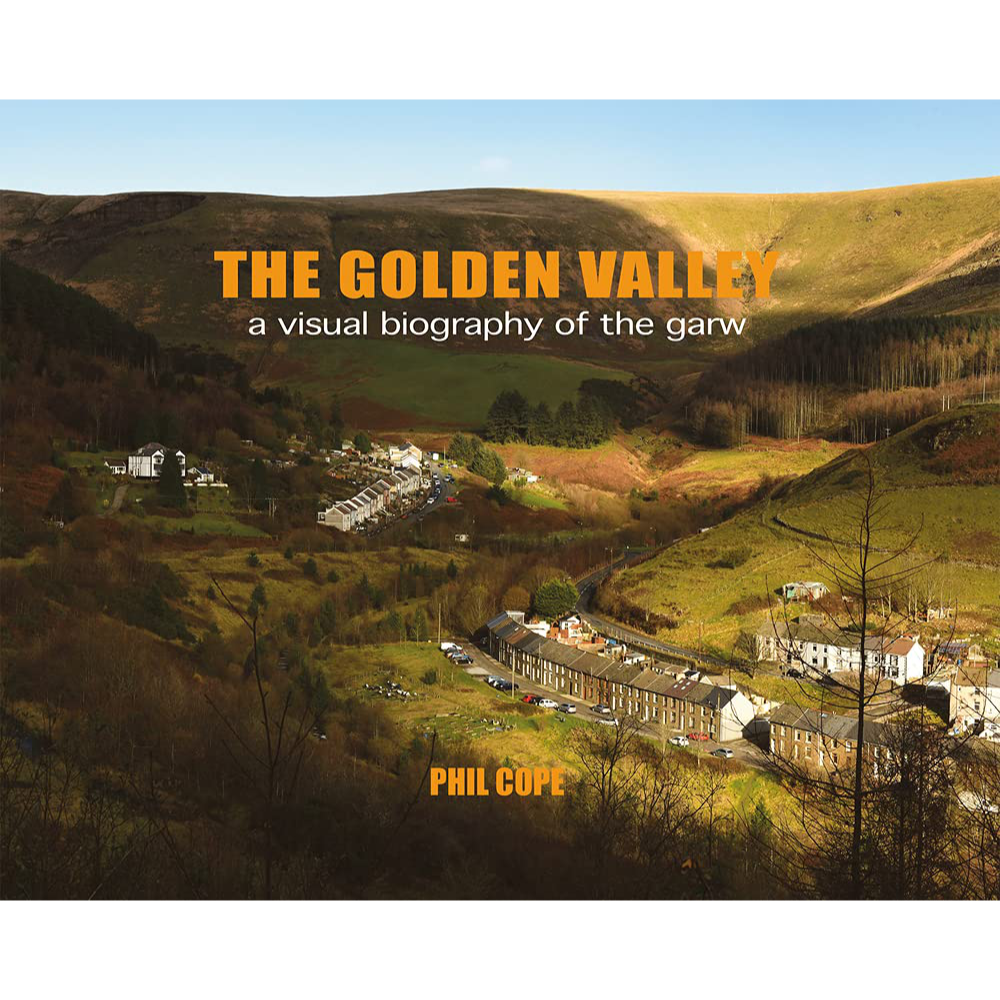 Image 1 of 5
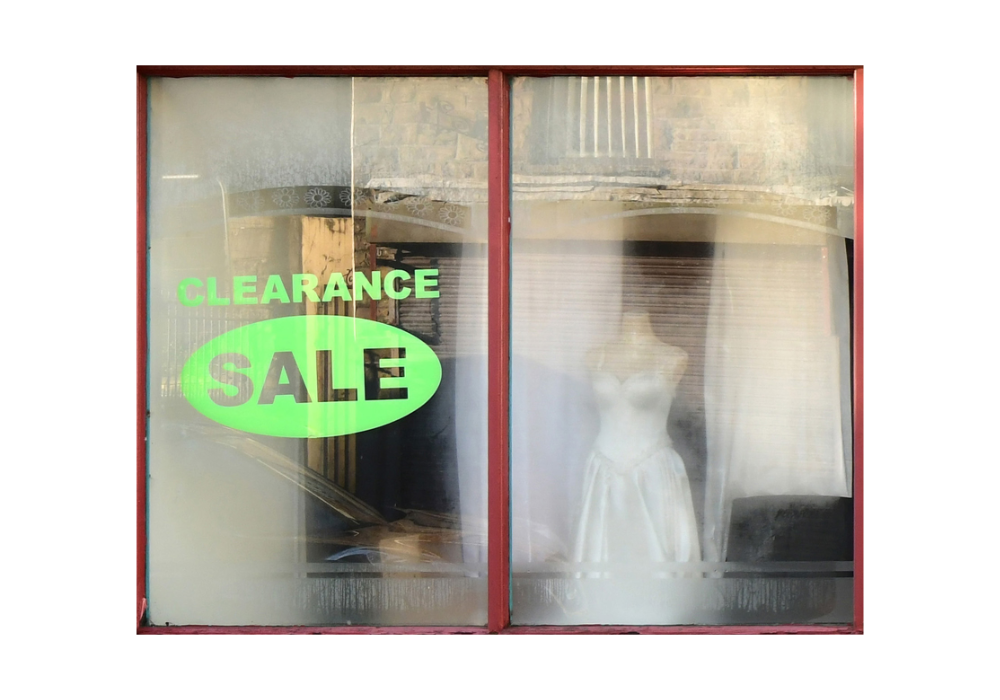 Image 2 of 5
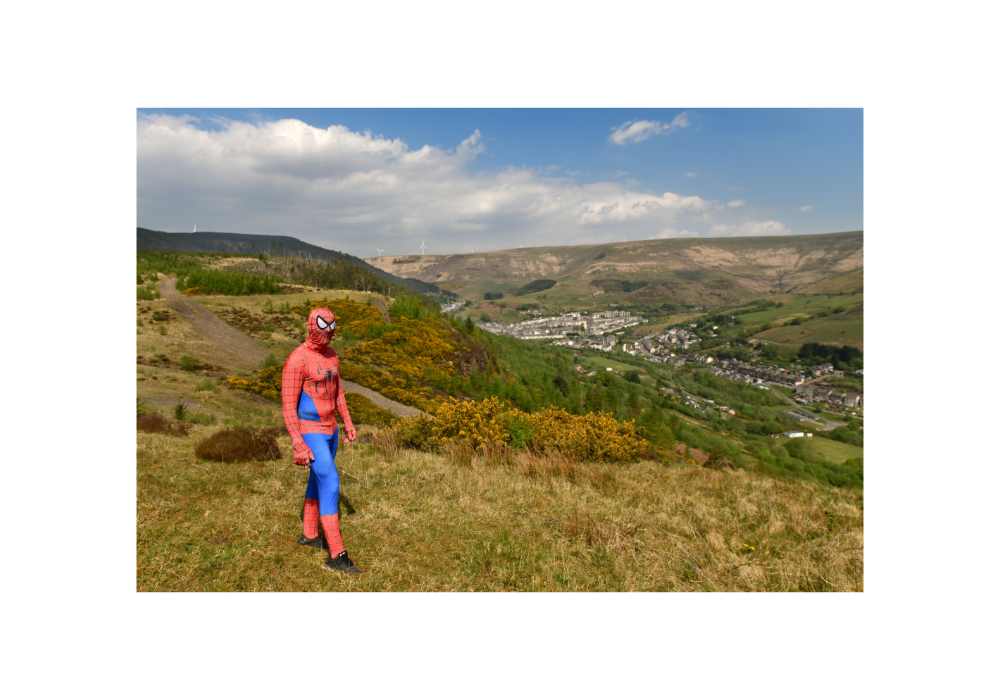 Image 3 of 5
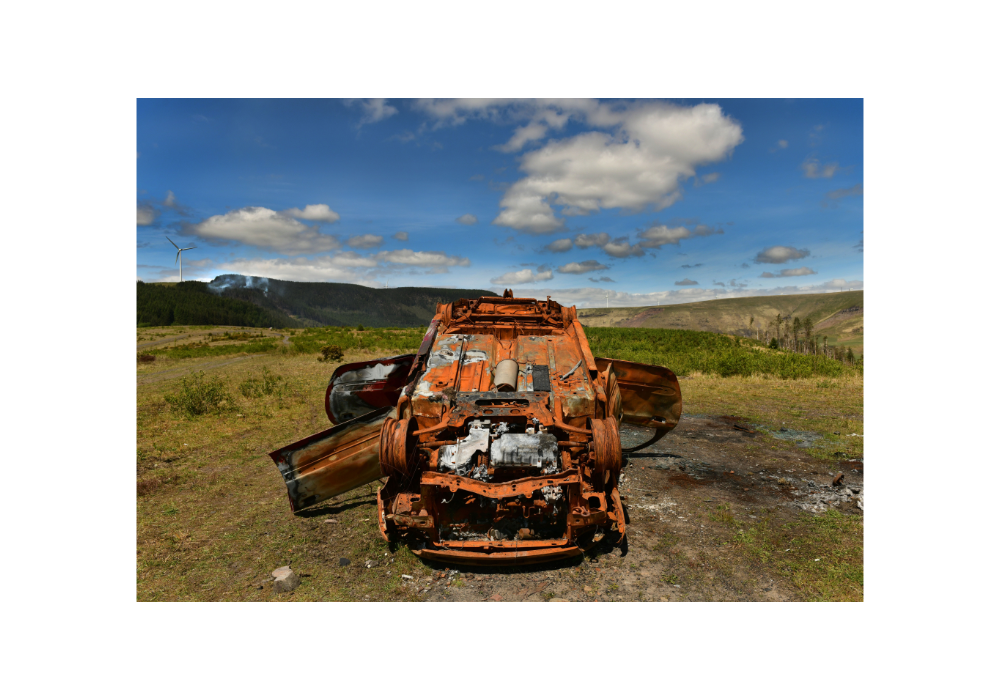 Image 4 of 5
 Image 5 of 5