Gerry Ray spent his formative years – between the ages of four and ten – in Australia, when his father moved halfway around the world for work. Turtles Dreaming Of Fish is a poetic re-imagining of this young boy’s journey into the aboriginal time-scape of dreams, of the Rainbow Spirit, of the Bunyip, the Yawkyawk, Walu, Bullurru, and the Yowie. Ngarra (meaning ‘friend’ in the Dharug language) accompanies the schoolboy on his flights of fancy where personal memories mix with historical events, ending in the apotheosis of Bungaree, the now largely-ignored explorer.
Gerry’s tales are told through the mystical lens of aboriginal Dreamtime, sitting alongside the bloody histories of the colonialists’ encounters with Australia’s native people and the poet’s own growing up. There’s no cultural appropriation here; instead a profound respect for what these explanations of the unexplainable offered a young boy, in laying the foundation stones for a poet.
Dreamtime myths, like poetry, defy the rational, both belonging in a world of the not quite clear, of glimpses and, sometimes, of profound revelations. Turtles Dreaming Of Fish is Gerry’s own creation story.
The last poem here bemoans the fact that there is no statue to remember the exploits of Bungaree. Turtles Dreaming Of Fish offers one, perhaps, in Gerry’s own words; a verbal construction to celebrate native myth and knowledge (as well as the tragedies of much of this history), a re-examination of what he saw and what he learned, and the important part it was to play in his writing.
Turtles Dreaming of Fish is beautifully illustrated with Rhod Dawe’s powerful artworks.
Gerry Ray spent his formative years – between the ages of four and ten – in Australia, when his father moved halfway around the world for work. Turtles Dreaming Of Fish is a poetic re-imagining of this young boy’s journey into the aboriginal time-scape of dreams, of the Rainbow Spirit, of the Bunyip, the Yawkyawk, Walu, Bullurru, and the Yowie. Ngarra (meaning ‘friend’ in the Dharug language) accompanies the schoolboy on his flights of fancy where personal memories mix with historical events, ending in the apotheosis of Bungaree, the now largely-ignored explorer.
Gerry’s tales are told through the mystical lens of aboriginal Dreamtime, sitting alongside the bloody histories of the colonialists’ encounters with Australia’s native people and the poet’s own growing up. There’s no cultural appropriation here; instead a profound respect for what these explanations of the unexplainable offered a young boy, in laying the foundation stones for a poet.
Dreamtime myths, like poetry, defy the rational, both belonging in a world of the not quite clear, of glimpses and, sometimes, of profound revelations. Turtles Dreaming Of Fish is Gerry’s own creation story.
The last poem here bemoans the fact that there is no statue to remember the exploits of Bungaree. Turtles Dreaming Of Fish offers one, perhaps, in Gerry’s own words; a verbal construction to celebrate native myth and knowledge (as well as the tragedies of much of this history), a re-examination of what he saw and what he learned, and the important part it was to play in his writing.
Turtles Dreaming of Fish is beautifully illustrated with Rhod Dawe’s powerful artworks.
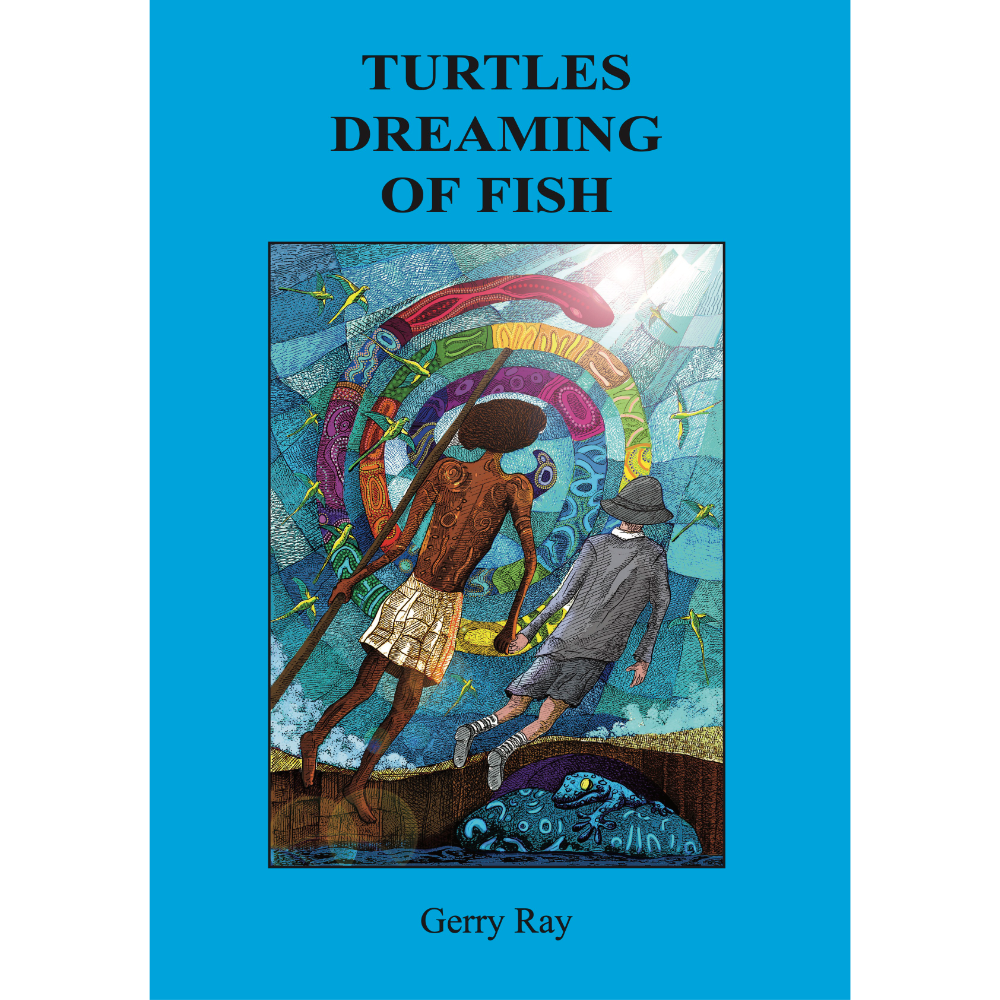 Image 1 of 4
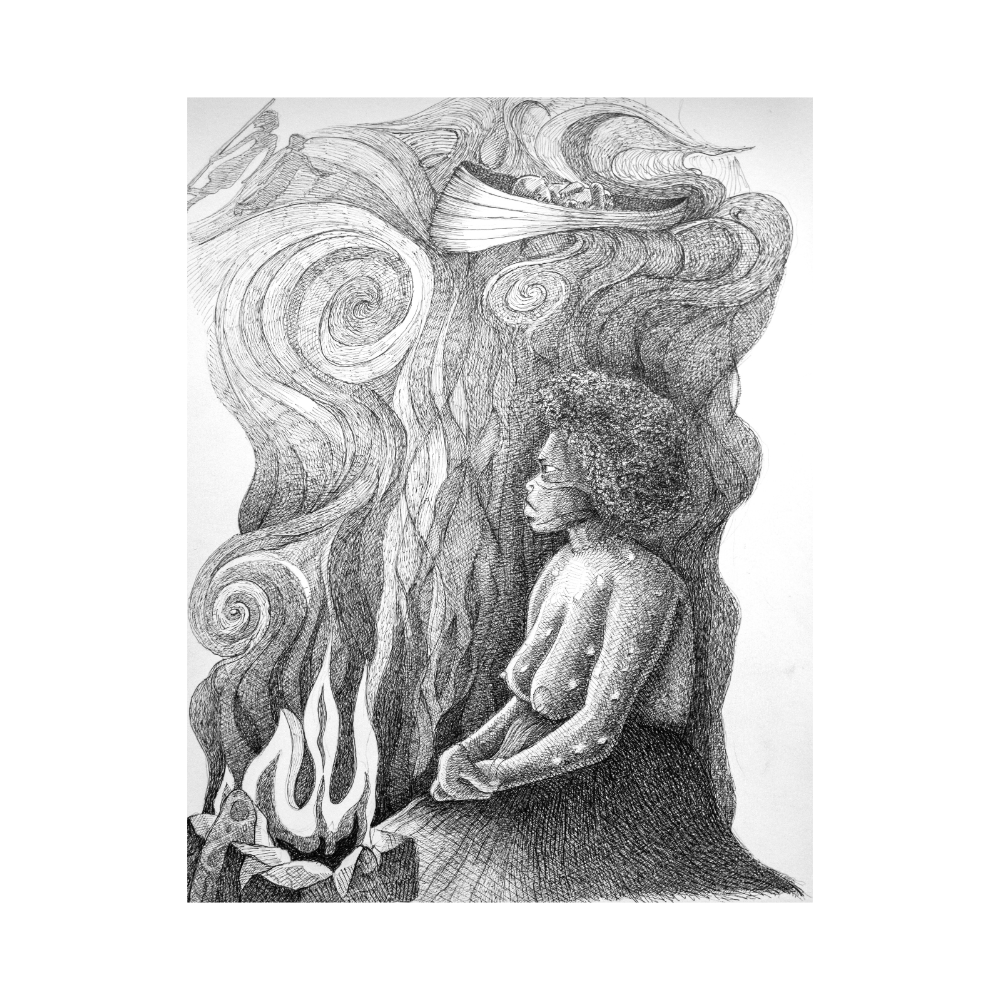 Image 2 of 4
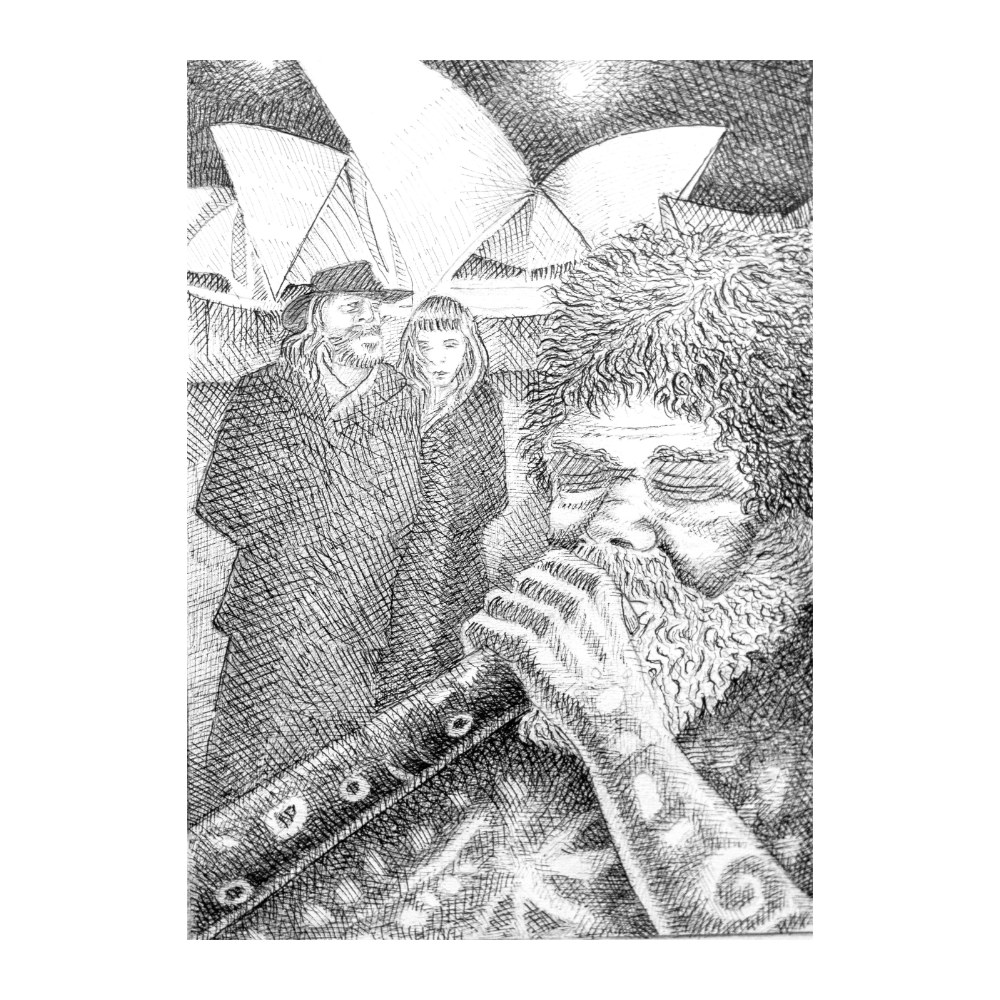 Image 3 of 4
 Image 4 of 4